
Following Eating Disorder Awareness week, I talk to Sophie, a third year midwifery student at York university, about her eating disorder. We talk about how she came to terms with it and what she does now to encourage body positivity.
Here is her story.
To listen to the full interview, follow this link.
Before starting university, Sophie was diagnosed with ME (chronic fatigue syndrome) after having been ill with glandular fever.
“Because of ME, I wasn’t able to go to school. I was missing out on time with friends and family. It was from there that I ended up with an eating disorder, because it was me trying to regain control over my life.”
Although Sophie was experiencing problems with eating at a young age, it wasn’t until she was 20 years old that she realised she needed help. However, she found that it was difficult to talk about with others because she was scared of peoples’ judgements. But this was not the case.
“I didn’t want to be the one with mental health problems.”
Sophie Atkinson
Since opening up about her eating disorder, Sophie has been working on her mental health, concentrating on her midwifery course and enjoying her time with friends at uni.
Whilst some may think that images on social media can have a negative impact on someone’s mental health, Sophie has managed to turn that into a positive. At first, social media was impacting badly on her mental health, and encouraging her eating disorder, but now she uses it to speak to people who have been through similar experiences to her and to feel less alone.
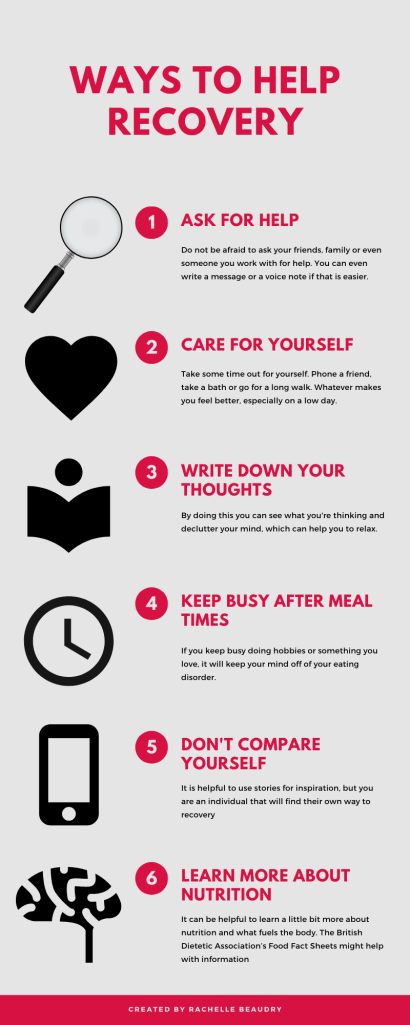
Something that she finds significantly helps her, is writing any worries and thoughts down in a journal. “It’s hard to tell other people what you are thinking, so it’s good to write it down and get it out of your system.”
Another activity that she loves is SOS, a dance school aimed at empowering women in confidence and strength by using dance.
She also says that when it comes to others trying to help her, the main thing someone can do when she is in a rough spot is to just be there and listen to her.
Her relationship with food has also become significantly better, and loves going out and eating with friends (I really don’t blame her, eating out is such a treat).
“An eating disorder takes away every aspect of life. Now to be able to get up in the morning and to think, hmm, what should I have for breakfast? To not have that stress…It’s the mental clarity that is the best thing”.
Sophie Atkinson
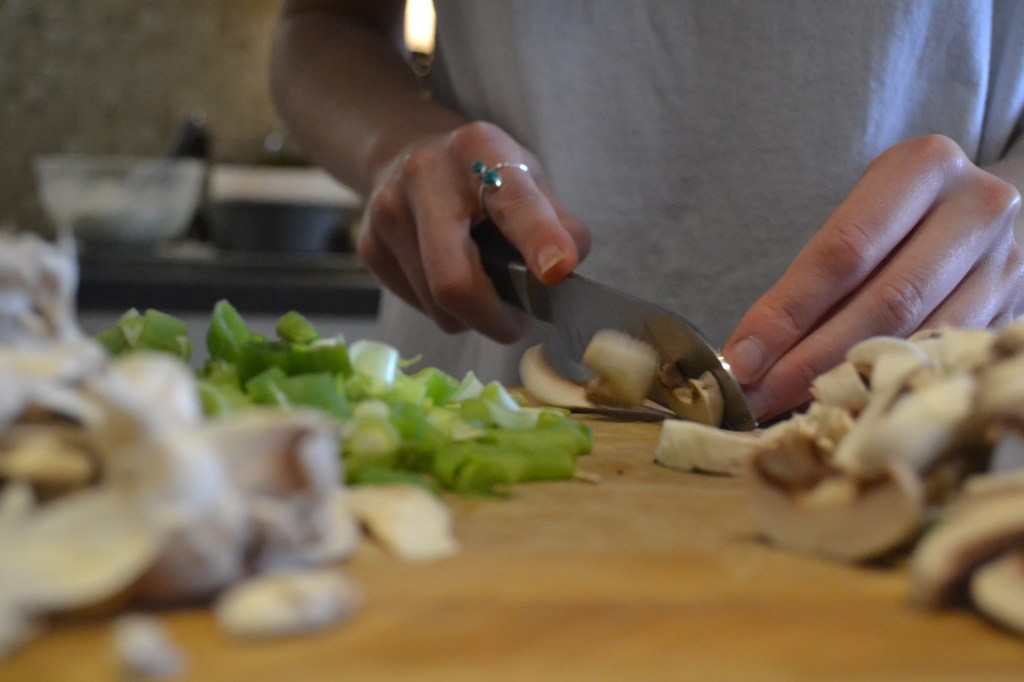
To try out the mushroom risotto, click here for the recipe.
Next week, Sophie and I carry on our conversation and we go on to talk about the pressures of student midwives. Stay notified by subscribing to this blog and following the Instagram and Facebook page.
If you would like to share your wellbeing experiences on this blog, then please contact me via my Facebook or Instagram page, or you can leave a message in the comment box below.
If you are someone who may be dealing with an eating disorder, or you worry that someone else is, please talk to your GP.
You can also contact the National Eating Disorders Association Helpline: 1-800-931-2237.
NEDA offers support Monday–Thursday from 9 a.m.–9 p.m and Friday from 9 a.m.–5 p.m. You can expect to receive support, information, referrals, and guidance about treatment options for either you or your loved one.
If you are a student at Newcastle University, you can get help by going to these websites:
 Healthy Eating, Healthy Thinking
3 Comments Add yours